


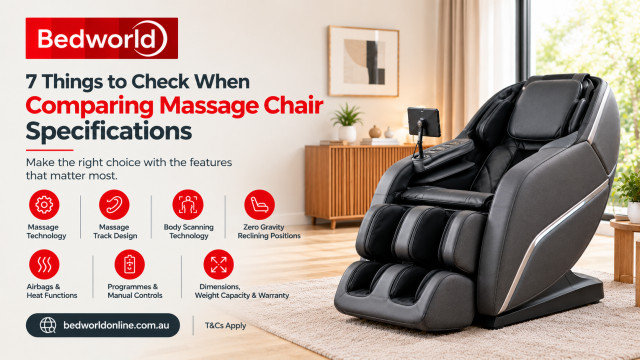
Choosing a massage chair can be challenging when different models advertise multiple features, technologies and massage programmes. Some focus on advanced roller systems, while others highlight zero gravity positioning, body scanning or air compression. Understanding these specifications can help you compare models more effectively.
Before making a purchase, it is worth looking beyond the product images and price. This guide covers seven important massage chair specifications to check so you can find a model that suits your comfort preferences, available space and budget.
1. Massage Technology: 2D, 3D or 4D
The massage mechanism is one of the most important specifications to compare.
• 2D massage: Rollers generally move up and down and from side to side.
• 3D massage: Adds inward and outward movement, allowing users to adjust massage depth.
• 4D massage: Provides additional control over roller speed and rhythm for a more varied massage experience.
The right option depends on your preferred massage intensity and budget. A higher number does not automatically mean a better experience for every user.
2. Massage Track Design
Check the type and length of the massage track. Common designs include S-track, L-track and SL-track systems.
An S-track follows the natural curve of the spine, while an L-track generally extends further down towards the lower back and gluteal area. SL-track designs combine aspects of both.
Compare the areas covered by the rollers and check the manufacturer's specifications rather than assuming every track offers the same coverage.
3. Body Scanning Technology
Some massage chairs include automatic body scanning to identify shoulder height and help position the rollers according to the user's body shape.
This feature can improve how the massage mechanism aligns with different users. However, scanning systems and their adjustment capabilities vary, so check whether the chair allows manual positioning as well.
4. Zero Gravity Reclining Positions
Zero gravity positioning is another feature worth comparing. It reclines the chair while elevating the legs to create a supported resting position.
Some models offer multiple reclining angles, while others provide a single preset position. Check how much space the chair needs when fully reclined and whether its footrest adjusts comfortably.
5. Airbags and Heat Functions
Massage chairs may include airbags around the shoulders, arms, hips, calves and feet. These inflate and deflate to apply compression during a session.
Also check whether the chair includes heating functions and which areas receive warmth. Some models provide lumbar heat, while others offer additional heating zones.
If you want to compare different massage technologies and features, explore Electric Massage Chairs Perth to review available models from Bedworld.
6. Automatic Programmes and Manual Controls
The number and variety of massage programmes can affect how easy a chair is to use. Automatic programmes provide preset routines, while manual settings allow users to select specific body areas, techniques and intensity levels.
Check whether the chair has an easy-to-use remote, touchscreen or voice control. The control system should be simple enough to adjust without interrupting your relaxation time.
7. Dimensions, Weight Capacity and Warranty
Always review the physical specifications before purchasing.
• Dimensions: Check the chair's width, depth and height in both upright and reclined positions.
• Weight capacity: Confirm that the manufacturer's stated user weight limit is suitable.
• User height range: Check whether the footrest and massage rollers can accommodate your height.
• Warranty: Review the coverage period, included components, servicing arrangements and exclusions.
For a closer look at how specifications translate into an actual product, consider the Genesis Plus 4D Massage Chair. Reviewing an individual model can help you compare its features against the requirements you have identified.
Frequently Asked Questions
1. What is the most important specification in a massage chair?
Massage technology, body coverage, adjustable intensity and user comfort are important starting points. The best combination depends on your needs and preferences.
2. What is the difference between 3D and 4D massage chairs?
Both offer depth adjustment, but 4D systems generally provide additional control over roller speed and rhythm. Features vary by manufacturer.
3. Is an L-track better than an S-track?
An L-track generally extends massage coverage further down the body, while an S-track follows the spine's natural curve. Neither is automatically better for everyone.
4. Why should I check the massage chair's dimensions?
Checking dimensions helps ensure the chair fits through doorways and has enough room to recline comfortably in your home.
5. Are more automatic programmes always better?
Not necessarily. A smaller selection of useful programmes with adjustable settings may be more suitable than a large number of routines you rarely use.
Final Thoughts
Comparing massage chair specifications helps you understand what each model offers beyond its appearance and price. Pay attention to massage technology, track design, body scanning, reclining positions, additional functions, controls and physical dimensions. Taking time to review these details can help you choose a massage chair that fits your home, comfort preferences and budget.

